The expensive part of cheap cookware is not the checkout price. It is the quiet replacement cycle: a $20 skillet this year, another next year, then a warped sauté pan that never sits flat again. Most budget cookware does not fail because it was doomed from day one. It fails because repeat damage adds up fast: too much heat, sudden cooling, abrasive cleaning, spray-oil buildup, and careless stacking. Brand care guides and nonprofit advice keep coming back to the same basics: gentler heat, softer tools, hand-washing, and better storage extend service life. (heart.org)
If you’ve got a bunch of bargain basement skillets, old starter sets, or 2nd-hand pots in your kitchen then you can count yourself lucky since you do not require high-end gear to create a decent (long-lasting) home cooking skill set. What you actually require is a routine that matches the actual surface materials that you possess and avoids the one or two “bad habits” that can cause your are ready to go (and last) for quite some time.
Table of Contents
- Why budget pans wear out early
- Use the CHEAP Pan Score once a month
- The money math favors routine, not replacement
- The habits that actually move the needle
- A 10-minute weekend reset for tired cookware
- Common mistakes that quietly shorten lifespan
- When careful habits still will not save the pan
- How to pressure-test your routine
- Bottom line
- FAQ
- References
TL;DR
- For most nonstick and ceramic pans, low to medium heat should be the default. (heart.org)
- Hand-washing is usually the best move for longevity, even when a pan is labeled dishwasher safe. (calphalon.com)
- Metal tools, steel wool, aerosol sprays, and bare stacking scratch finishes faster than many people realize. (heart.org)
- Cast iron and many stainless pieces can often be restored; coated pans depend much more on prevention. (lodgecastiron.com)
- A small care kit can cost less than one replacement skillet and save more over time.
Why budget pans wear out early
Cheap cookware usually has less margin for abuse. That does not make it bad. It just means the same mistakes show up faster. Manufacturers warn that sudden temperature swings can warp cookware, and repeated dishwasher cycles can dull stainless, fade coatings, and stress handles over time. If you want low-cost cookware to last, stop treating every pan the same and start protecting the finish and shape that make it usable in the first place. (calphalon.com)
Use the CHEAP Pan Score once a month
If you want to find out how well your routine is prolonging or shortening the life of your pan, use this simple tool. Score 0 (never), 1 (sometimes) or 2 (often) for each item. Then tally the points.
- C – Cold-water shock: Do you rinse hot pans under cold water right after cooking?
- H – High heat: Do you routinely run nonstick or ceramic above medium, or preheat empty pans on high?
- E – Edge contact: Do pans stack bare, slide across each other, or bang together in a crowded cabinet?
- A – Abrasion: Do you use metal utensils, steel wool, or harsh scrubbers on coated surfaces?
- P – Pantry neglect: Do you store pans damp, leave cast iron dry and unprotected, or let sticky spray residue build up?
A score of 0 to 2 means your habits are mostly protective. A score of 3 to 5 means one or two patterns are probably shaving months off the life of your cookware. A score of 6 or higher usually means you are paying a replacement tax. Every item on this list maps to damage sources that care guides explicitly flag: warping from temperature shock, scratches from metal tools or stacking, wear from abrasive cleaning, residue from spray oils, and rust or finish damage from poor drying and storage. (heart.org)
Always check the care guide for your exact pan. Even within one brand, some collections are dishwasher safe or metal-utensil safe and others are hand-wash only. If the maker’s instructions conflict with a general tip, follow the maker’s instructions. (heart.org)
The money math favors routine, not replacement
Say a household owns a $24 nonstick skillet, a $36 stainless sauté pan, and a $55 enameled Dutch oven from a budget line. If the nonstick pan gets blasted on high heat and stacked bare, it may need replacement every year. Over six years, that is $144 for one skillet alone. If lower heat, hand-washing, and basic storage protection stretch that pan to three years, the six-year cost drops to $48. Add a $7 silicone utensil set, a $4 nylon scrubber, and two $3 pan protectors, and the household is still ahead by about $79. The point is not to baby cookware. It is to stop paying for avoidable damage.
| Type | Biggest enemy | Best longevity move | Repair or replace? |
|---|---|---|---|
| Nonstick aluminum | High heat, metal tools, spray-oil residue, bare stacking | Use low to medium heat, soft tools, hand-wash when possible, and separate stacked pans. (heart.org) | Usually replace once the surface is peeling, deeply gouged, or badly warped. |
| Ceramic nonstick | Overheating, abrasive pads, sticky carbonization, rough storage | Keep heat low to medium, skip aerosol sprays, clean with soft tools, and protect surfaces in storage. (greenpan.us) | Replace when performance drops badly or the cooking surface is chipped or failing. |
| Stainless steel | Thermal shock, dishwasher dulling, aggressive scrubbers | Let it cool before washing, use nonabrasive cleaners, and hand-wash if finish matters to you. (calphalon.com) | Usually keep using unless it warps badly, layers separate, or a handle becomes loose. |
| Bare cast iron | Moisture, weak seasoning, long acidic cooks on fresh seasoning | Dry immediately, add a very thin coat of oil when needed, and reseason instead of replacing. (lodgecastiron.com) | Most pieces are worth restoring unless cracked. |
| Enameled cast iron | Metal tools, high heat, wet rims, stacking damage | Use low to medium heat, dry thoroughly, and avoid stacking or metal-on-enamel contact. (lodgecastiron.eu) | Keep using with light staining; rethink use if the interior enamel chips or cracks. |
The habits that actually move the needle
Lower the heat before you lower your expectations
For nonstick and ceramic, high heat is often the fastest route to a shorter life. The American Heart Association says most nonstick cookware is intended for low- and medium-heat cooking, GreenPan gives the same low-to-medium guidance for ceramic nonstick, and Lodge says enameled cast iron performs best over low to medium heat. If you are preheating a bargain pan on high while you chop onions, you are often using up lifespan for little real cooking benefit. (heart.org)
Treat dishwasher-safe as emergency-safe, not everyday-safe
Dishwasher safe does not mean dishwasher optimal. Calphalon says hand-washing helps preserve the luster of stainless even when a line can go in the dishwasher, and Cuisinart warns that repeated wash cycles can dull stainless, fade coatings, and stress handles over time. If your goal is maximum life from low-cost cookware, the dishwasher should feel like a convenience option, not your default maintenance plan. (calphalon.com)
Ban two quiet finish-killers: spray oil and rough scrubbers
Aerosol sprays and aggressive scrubbers cause a lot of mysterious pan decline. Calphalon says aerosol sprays can leave difficult-to-remove propellant residue, and GreenPan says spray oils can burn into sticky carbonization. Cuisinart warns that steel wool and heavy scrubbing pads scratch stainless and wear away nonstick or ceramic coatings. If food sticks, solve the heat and oil problem first, then clean with a soft sponge or nylon brush. (calphalon.com)
Store pans like the surfaces matter
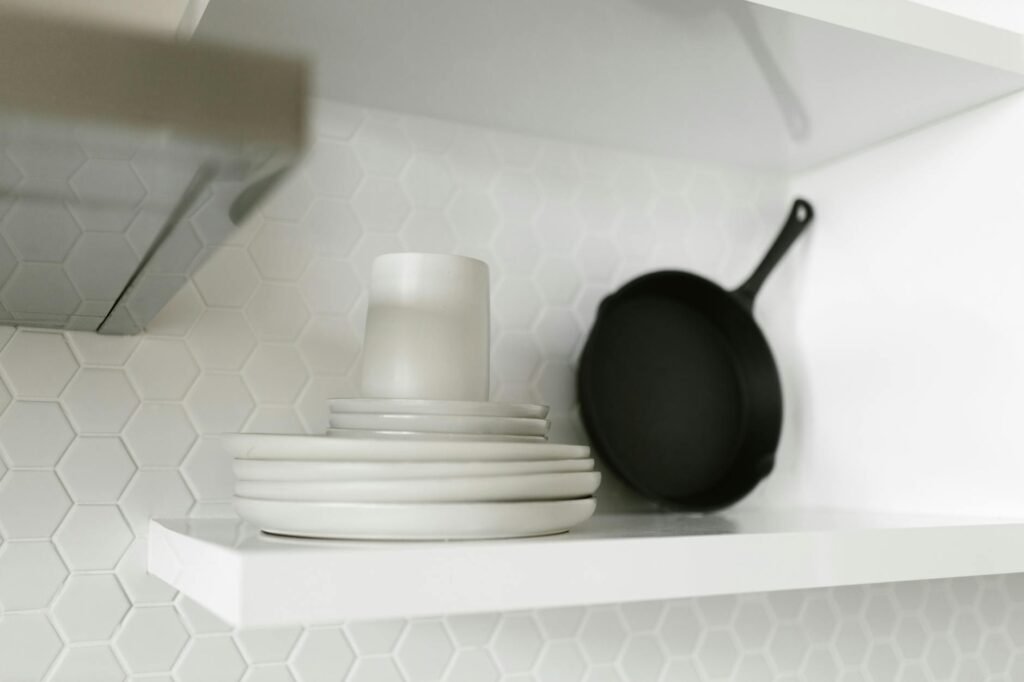
Storage damage is easy to ignore because it happens when you are not cooking. It still counts. Calphalon says stacking pans directly on each other can scratch nonstick and ceramic interiors, and the American Heart Association recommends a paper towel or similar barrier between stacked nonstick pans. In a cramped cabinet, a cheap protector, dish towel, or folded paper towel does real financial work. (calphalon.com)
Learn the difference between ugly and ruined
Not every ugly pan is a dead pan. Lodge notes that cast iron seasoning can look patchy, dull, or leave dark residue after acidic food or high heat, and the answer is often continued cooking or a reseasoning cycle. Lodge also says light staining on enameled cast iron is expected and does not affect performance. That is a valuable budget skill: separate cosmetic wear from functional failure before you replace something. (lodgecastiron.com)
A 10-minute weekend reset for tired cookware
- Sort by surface first: nonstick and ceramic together, stainless together, cast iron and enameled cast iron together. The right fix depends on the finish.
- Let every pan cool before washing. Sudden temperature changes can warp cookware, especially thinner pieces. (calphalon.com)
- Wash with mild dish soap and a soft sponge or nylon brush. Skip steel wool and other harsh pads on coated surfaces. (cuisinart.com)
- For sticky enamel or stubborn residue, try a gentler cleanup method before brute-force scrubbing. Lodge suggests boiling water with baking soda for baked-on food in enameled cast iron. (lodgecastiron.eu)
- Dry fully before storage. For cast iron, towel-dry right away and add a very thin coat of oil when the seasoning looks dry. For enameled cast iron, dry the rim well. (lodgecastiron.com)
- Store with separators. A paper towel, napkin, trivet, or pan protector is cheaper than a replacement interior. (calphalon.com)
If you only do one maintenance session each week, make it this one. It helps keep small damage from becoming permanent damage.
Common mistakes that quietly shorten lifespan
- Preheating empty nonstick or ceramic on high while you prep ingredients. (heart.org)
- Rinsing a hot pan under cold water because you want the mess gone immediately. (calphalon.com)
- Assuming dishwasher-safe means repeated dishwasher use has no tradeoffs. (cuisinart.com)
- Using metal spatulas or steel wool on any coated surface. (heart.org)
- Stacking pans bare in a crowded cabinet. (calphalon.com)
- Leaving cast iron near the sink or storing enamel with moisture around the rim. (calphalon.com)
When careful habits still will not save the pan
Some failures are not maintenance problems; they are end-of-life signals. Made In’s warranty page says nonstick coatings are consumable by nature and does not treat damage from overheating, metal utensils, dishwashers, or improper care as warranty coverage. That is a useful budgeting lens. Keep using stainless with cosmetic wear. Reseason cast iron. Live with light enamel staining. But do not pour time into a coated pan that is clearly failing. (madeincookware.com)
Backup options matter. A stained but intact Dutch oven can stay in service. A tired stainless skillet can become the reheating or pan-sauce pan. A cast-iron skillet with weak seasoning usually deserves a reset, not the trash. But if a handle loosens, bonded layers separate, or the cooking surface is chipped, cracked, or peeling, replacement or a warranty claim is usually the smarter move than another round of scrubbing. (madeincookware.com)
This article is general information, not brand-specific safety guidance. Check your exact collection’s care page and warranty terms before you scrub hard, use the dishwasher, or assume a pan can handle metal tools. (heart.org)
How to pressure-test your routine
Cookware care is not based on how shiny your pan looks after one cleaning; rather, it is based on the association of your care routine and how well it reduces sticking, residue, scratches, and wobble with an audit (for a minimum of 30 days) versus trying to guess.
- Pick three repeat foods: eggs, tomato sauce, and a basic sauté or stir-fry.
- Track heat level, cleanup time, and whether food sticks more or less than it did last month.
- Check storage marks every weekend. If new scratches keep appearing, your cabinet setup is part of the problem.
- Set each pan on a flat burner or counter before and after the month. If rocking gets worse, no cleaning trick will fix that.
- If performance improves, keep the routine. If not, the pan may be past the point where maintenance beats replacement.
Bottom line
When removing abuse from inexpensive cookware, your investment will last longer than it will by using “miracle” products or replacing pieces due to frustration over time. Use less heat, wash by hand more often, protect your pans from damage while they’re stored, and understand the difference between cosmetic versus irreparable damage. The difference between replacing your budget cookware frequently or getting many years of reliable use out of them is how you handle your cooking tools.
FAQ
Is hand-washing really worth it for a cheap pan?
Usually, yes. Calphalon says hand-washing helps preserve stainless luster even for dishwasher-safe lines, and Cuisinart warns that repeated dishwasher cycles can dull stainless, fade coatings, and stress handles. If you are trying to stretch service life, hand-washing is a high-return habit. (calphalon.com)
Can a cheap nonstick skillet really last several years?
It can, but it depends on use. Nonstick surfaces wear over time, and Made In describes them as consumable by nature. Your odds improve if you use low to medium heat, soft utensils, gentler cleaning, and protected storage instead of daily high-heat abuse. (madeincookware.com)
What should I do with a stained enameled Dutch oven?
Do not replace it just because it looks used. Lodge says some staining is expected with enameled cookware and does not affect performance. Start with gentler cleaning and keep using it unless the interior enamel is actually damaged. (lodgecastiron.eu)
Can cast iron usually be saved after rust, dull seasoning, or dark residue?
Often, yes. Lodge says seasoning can be rebuilt, acidic foods can dull newer seasoning, and some dark residue can be normal after high heat or acidic cooking. In many cases, continued use or a reseasoning cycle is the right fix. (lodgecastiron.com)
What is the fastest way to ruin bargain cookware?
The short answer is combining high heat, cold-water shock, and abrasion. Nonstick care guidance warns against high heat and metal utensils, while stainless and coated cookware guides warn against plunging hot pans into cold water and using heavy scrubbers. Put those together and cheap cookware ages fast. (heart.org)
References
- Lodge Cast Iron – How to Season – https://www.lodgecastiron.com/pages/how-to-season
- Lodge Cast Iron – How to Clean and Care for Enameled Cast Iron Cookware – https://lodgecastiron.eu/en/pages/clean-enameled-cast-iron
- Calphalon – Cookware Use & Care – https://www.calphalon.com/use-and-care.html
- Calphalon – Cookware Use & Care FAQs – https://www.calphalon.com/supportShow?cfid=cookware-use-and-care
- GreenPan – Care & Use – https://www.greenpan.us/pages/care-use
- Cuisinart – Dishwasher Safe Cookware – https://www.cuisinart.com/dishwasher-cookware.html
- American Heart Association – Caring for Your Non-Stick Skillets – https://www.heart.org/en/healthy-living/healthy-eating/cooking-skills/preparing/caring-for-your-non-stick-skillets
- Made In – Warranty Policy – https://madeincookware.com/pages/warranty