TL;DR
- The biggest heat mistake is treating the burner like a fixed setting instead of a moving target.
- Most good stovetop cooking uses a heat curve: preheat, first contact, lower to finish, then account for carryover.
- Use the 4C Heat Control Audit before you cook: Contact, Crowd, Curve, Carryover.
- In one ordinary household scenario, a ruined $18.50 dinner plus a $24 rescue takeout order twice a month adds up to $1,020 a year.
- For meat, fish, eggs, and leftovers, use a food thermometer. USDA says it is the only reliable way to know food reached a safe minimum internal temperature. (fsis.usda.gov)
Home cooks often blame ingredients when dinner disappoints. In reality, plenty of meals go wrong because the heat never changes. The pan stays too hot after the initial sear, or it never gets hot enough to evaporate surface moisture before the food releases even more of it. Browning, tenderness, and texture depend on managing heat, moisture, and time together – not just buying better groceries. (extension.illinois.edu)
That matters for the budget, too. EPA says the average cost of wasted food is $728 per U.S. consumer per year, or $2,913 for a household of four. If your weeknight meals regularly burn, stick, dry out, or turn mushy, part of your grocery bill may be getting lost after checkout, not before. (epa.gov)
The real mistake: cooking at one heat level
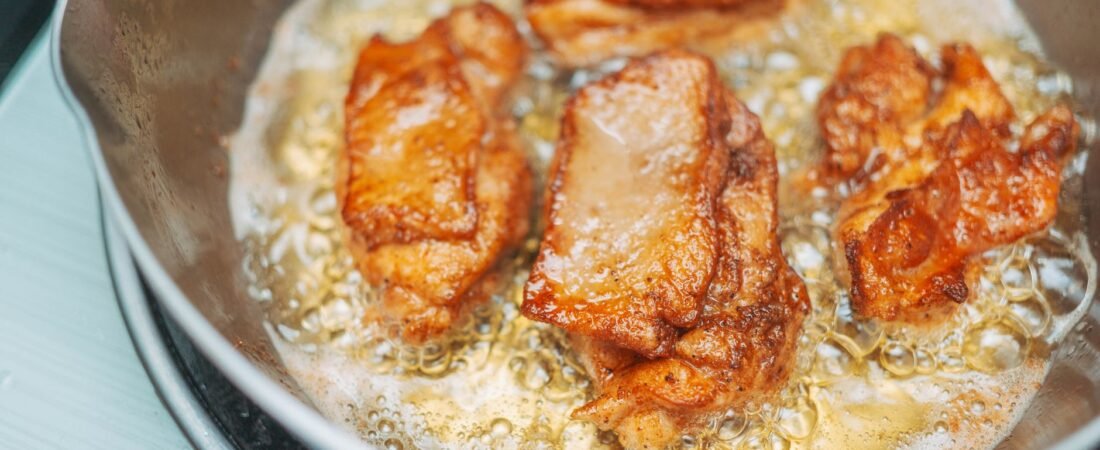
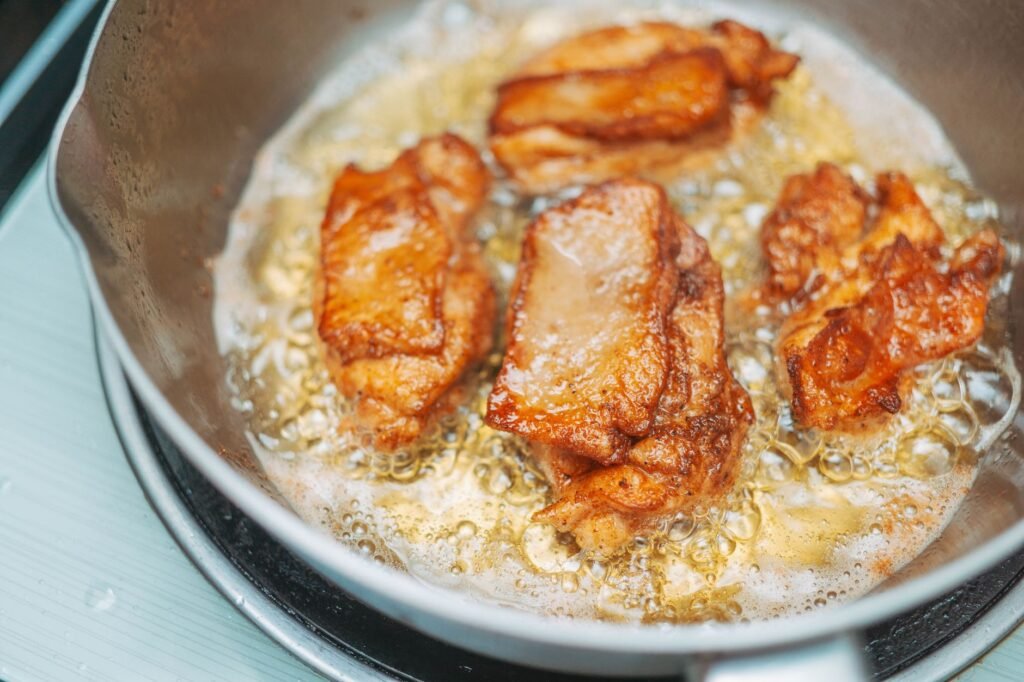
The most common home-kitchen error is simple: turning the burner to medium-high or high and leaving it there because the food needs heat. But different stages of the same dish need different temperatures. Chicken thighs may need enough heat to start browning, lower heat to cook through, and a short rest off heat. A pan sauce often starts hot enough to reduce, then needs a calmer finish once butter or cream goes in. If the knob never moves, the food usually pays for it. (extension.illinois.edu)
High-heat confusion occurs because people view heat as a symbol of seriousness, rather than as an instrument. High heat might be appropriate for the first minute of a searing process and inappropriate for the next four minutes. Medium heat may be too strong for scrambled eggs, but too weak for cremini mushrooms when there is not room in the pan to manage the mushrooms’ natural juices.
Ask yourself, instead of what temperature the recipe states, what temperature does your particular food require for its present state?
Use this tonight: the 4C Heat Control Audit
Conduct a short assessment, lasting no longer than 15 seconds, to determine the overall potential risk of cooking currently (score of 1 for the cooking method/technique in general or each yes). Generally, if you receive one score of either 0 or 1, starting at medium-high is usually acceptable. If you receive (2) (2) points total, start at medium and plan to reduce your heat level sooner rather than later. If you receive (3) or (4) points total, do not attempt to cook using the extremely hot pan method; instead resort to cooking in smaller batches / utilize the oven, or switch to a more mild method of preparation.
- Contact: Is the food wet, sugary, or coated in a marinade? Wet surfaces slow browning, and sugar burns early. Pat dry or start lower.
- Crowd: Will the pan be more than about two-thirds covered? If yes, plan batches. Crowding traps steam and turns a sear into a shallow braise.
- Curve: Does the dish want a rising curve, a steady simmer, or a falling finish? Eggs, fish, dairy sauces, and garlic-heavy dishes usually want falling heat.
- Carryover: Will the pan keep cooking after you lower the burner? Cast iron holds heat well, and slower-to-change setups reward earlier adjustments. NDSU Extension notes that cast iron holds heat, while DOE notes that induction creates heat in the cookware itself and stops heating once the cookware is removed. (ag.ndsu.edu)
For instance, salmon fillets placed in a stainless steel frying pan will typically earn a score of about 2. Salmon fillets are cold, fragile, and will overcook quickly if not handled carefully/appropriately; therefore, using a medium or medium-high heat setting on your stove will yield better results when cooking them compared to using a hot-burning heat source. Some examples of items that might rate as 3 or 4 and should therefore be patted dry prior to cooking and browned lightly before being finished at a lower temperature or in an oven would be boneless chicken thighs that have been marinated with sweet sauces.

A simple decision table for common meals
| Dish or goal | Best starting heat | When to adjust | What ruins it most often | Best fallback |
|---|---|---|---|---|
| Eggs, soft scramble or omelet | Low to medium-low | Lower as soon as curds form | Pan too hot; fat browns before eggs set | Pull early and finish with residual heat |
| Chicken breasts or thighs | Medium to medium-high for initial browning | Lower after color develops; cover or oven-finish if thick | Burner left high; exterior darkens before center cooks | Finish in a 350°F oven or under a lid on low |
| Salmon or thin fish fillets | Medium | Reduce once the flesh releases easily | Pan overheated; glaze burns before fish is done | Add glaze at the end, not the start |
| Mushrooms, onions, or cut vegetables | Medium-high in a roomy pan | Keep steady, then lower near the end | Crowding, wet surfaces, constant stirring | Cook in batches |
| Tomato sauce or cream sauce | Medium to bring up, then low simmer | Lower as soon as bubbling is active | Boiling too hard, fat separates, sugars catch | Pull off heat and whisk in a splash of liquid |
| Leftovers | Medium-low | Cover once warmed and turn as needed | Reheating too hot; edges dry before the middle warms | Add a teaspoon of water or broth and use a lid |
Two small efficiency tweaks also help. DOE recommends covering pans and matching pan size to the heating element. Both reduce wasted heat, and the second improves control because a too-small burner under a wide pan creates hot and cool zones. NDSU Extension gives similar advice for cast iron, recommending a burner about the size of the pan. (energy.gov)
Technique first, appliance second
You do not need a luxury range to fix this problem. For most kitchens, the first upgrade is behavior, not hardware. What you do need is an accurate mental model of your equipment. Cast iron stores heat and stays aggressive after the knob comes down. Induction tends to respond quickly because the cookware is heated directly, while DOE and ENERGY STAR both note that induction transfers heat more efficiently than standard electric or gas setups. That does not make other stoves bad; it just means your timing changes. (ag.ndsu.edu)
As a practical inference from how different pans and cooktops hold or deliver heat, slower-to-change setups call for earlier reductions, and faster-to-change setups call for smaller ones. Either way, waiting for smoke or sticking to tell you the heat is wrong is an expensive habit. (ag.ndsu.edu)
A realistic weeknight example, with actual dollars at stake
Take a simple dinner for four: 1.75 pounds of boneless chicken thighs for $9, two bell peppers and an onion for $6, rice and broth for $2, and oil, garlic, and seasonings for about $1.50. Total planned meal cost: $18.50. The pan goes on high, the chicken goes in crowded and damp, the outside darkens too fast, the vegetables hit scorched oil, and the middle of the thickest pieces still needs time. Dinner stalls. A $24 pizza becomes the recovery plan.
In that completely ordinary scenario, one heat mistake turns a planned $18.50 dinner into $42.50 spent that night. If it happens twice a month, that adds up to $1,020 over a year. The point is not that every bad meal ends in takeout. It is that heat control is a budget skill as much as a cooking skill, especially when groceries are already bought and sitting in front of you. (epa.gov)
Common heat mistakes that look like ingredient problems
- Trying to brown wet food. If the surface is damp, the pan spends time evaporating water before real browning begins.
- Crowding the pan. One overfull batch is usually slower and worse than two smaller batches.
- Starting with the right heat and never changing it. Good cooking often means lower heat after the first minute or two.
- Adding garlic, butter, honey, or sugary sauces too early. They can go from flavorful to bitter fast.
- Stirring constantly when the food actually needs steady contact with the pan to brown.
- Spending more on better ingredients when the bottleneck is still heat control. Technique determines whether you actually taste the upgrade.
- Using color alone to judge doneness. USDA says a food thermometer is the only reliable way to know food has reached a safe minimum internal temperature, and a USDA study found many people still rely on visual cues for burgers. (fsis.usda.gov)
The 90-second heat reset when a dish starts going wrong
- Move the pan off the burner for 10 to 20 seconds. That interrupts the mistake before it compounds.
- Reduce the burner by at least one full step, not a tiny nudge.
- Spread the food out or remove part of it. Space is temperature control.
- If the pan looks dry and dark, add a small amount of fresh fat only after the heat settles.
- For thick proteins, switch from aggressive surface heat to gentler finishing heat: lid on low, or oven finish.
- Check the center, not the surface. For poultry, USDA recommends 165°F; for ground meats, 160°F; for fish, 145°F; leftovers and casseroles, 165°F. (fsis.usda.gov)
When better heat control still will not save the dish
Structural issues can create failures as much or more than technical issues. A crowded/challenging to find surface area (one thin overcrowded skillet) cannot sear four large pieces of meat at the same time. A marinade from a bottle that has high sugar content may burn up before the meat has the opportunity to cook thoroughly. A large volume of mushrooms in a small pan will steam until finished, regardless of how confident the chef is about the cooking technique. Instead of trying harder to accomplish a task when there are structural issues, change methods: batch process; use sheet pans; put into the oven after searing on the stovetop; use braise; use simmer, etc.
There is also a limit to what thrift can accomplish. If a burner heats unevenly, a pan warps, or the oven runs wildly hot, good technique may only compensate so far. DOE’s kitchen guidance still applies here: cover pans when appropriate, match the pan to the element, and use smaller appliances for small jobs instead of firing up a large oven. That will not rescue every dish, but it can reduce waste around the edges. (energy.gov)
Food safety note: Better heat control is not a substitute for a thermometer. USDA guidance is to use a food thermometer to confirm safe internal temperatures rather than relying on color or texture alone. (fsis.usda.gov)
How to verify this on your stove, not somebody else’s
Do a quick home test with one cheap ingredient. Slice two onions or cook two batches of mushrooms on separate nights. The first time, use your normal fixed burner setting. The second time, use the 4C method: dry the food, give it space, start at a measured heat, and lower it once browning begins. Compare color, sticking, moisture in the pan, and how much oil you needed. If the second batch browns more evenly and tastes sweeter or cleaner, your stove has already taught you something useful. (extension.oregonstate.edu)
- Keep a one-line log for three meals: pan used, burner setting, preheat time, when you lowered the heat, and how the food finished.
- Calibrate your food thermometer in ice water or boiling water if the model allows it. USDA lists both methods. (fsis.usda.gov)
- If you miss the target twice with the same pan, change one variable next time: less food, lower start, earlier reduction, or oven finish.
- When a dish improves three times in a row, keep that heat pattern. You are building house-specific data, not chasing internet perfection.
Bottom line
Bad ingredients can disappoint, but fixed heat ruins more dinners. The practical fix is to stop thinking in single settings and start thinking in heat curves. Preheat for the goal, expect the temperature drop when food lands, lower the heat sooner than feels intuitive, and account for carryover. Do that consistently and you may waste less food, rescue more weeknight meals, and get more value from the groceries you already paid for. (epa.gov)
Is high heat actually bad?
No. High heat is useful for brief searing, stir-frying, or reducing. The mistake is using high heat as the entire plan instead of one stage of the plan.
Why does food burn outside and stay underdone inside?
The surface is receiving energy faster than the center can catch up. Thick proteins often need initial color, then lower heat or an oven finish. A thermometer is the cleanest way to confirm the middle is done safely. USDA safe minimums include 165°F for poultry, 160°F for ground meats, and 145°F for fish. (fsis.usda.gov)
Do I need a better stove or pan to cook this way?
Usually no. Better equipment can make heat more predictable, but the first improvement is learning how your current setup stores and delivers heat. Cast iron holds heat; induction responds quickly and transfers heat efficiently. (ag.ndsu.edu)
How full is too full for a skillet?
A general guide is that if food occupies greater than roughly 66% of the surface area, expect slower browning and an increased chance of steaming. This is not a hard and fast rule, but is good enough for nights after work.
What is the quickest habit that improves results?
Lower the heat earlier than you think, especially once color appears. The second-quickest habit is checking doneness with a thermometer instead of guessing by color. USDA says a thermometer is the only reliable method for safe minimum temperatures. (fsis.usda.gov)
References
- US EPA: Estimating the Cost of Food Waste to American Consumers – https://www.epa.gov/land-research/estimating-cost-food-waste-american-consumers
- USDA FSIS: Safe Minimum Internal Temperature Chart – https://www.fsis.usda.gov/food-safety/safe-food-handling-and-preparation/food-safety-basics/safe-temperature-chart
- USDA FSIS: Food Thermometers – https://www.fsis.usda.gov/food-safety/safe-food-handling-and-preparation/food-safety-basics/kitchen-thermometers
- Department of Energy: Kitchen Appliances – https://www.energy.gov/energysaver/kitchen-appliances?linkId=693400332
- Department of Energy: Making the Switch to Induction Stoves or Cooktops – https://www.energy.gov/articles/making-switch-induction-stoves-or-cooktops
- ENERGY STAR: Electric Cooking Products – https://www.energystar.gov/products/electric_cooking_products
- North Dakota State University Extension: Why Cast Iron Cookware Remains in Style – https://www.ag.ndsu.edu/news/columns/prairie-fare/prairie-fare-seasoned-to-perfection-2013-why-cast-iron-cookware-remains-in-style
- Illinois Extension: Maillard reactions change the tastes of your food – https://extension.illinois.edu/blogs/simply-nutritious-quick-and-delicious/2021-11-19-maillard-reactions-change-tastes-your-food
- Oregon State Extension: Sautéed Onions – https://extension.oregonstate.edu/imported-publication/sauteed-onions