TL;DR
- The most common nonstick failure is not a mystery defect. It is user error: high heat, empty preheating, or aerosol spray residue. (all-clad.com)
- Before you replace a pan, run a quick diagnosis. Residue, overheating, and real coating damage can all look the same when breakfast starts sticking.
- If the surface is scratched, chipped, or pitted, skip rescue mode and replace the pan. (consumerreports.org)
- For most kitchens, the budget-friendly setup is one nonstick pan for delicate foods and one stainless or cast-iron pan for high-heat work. (consumerreports.org)
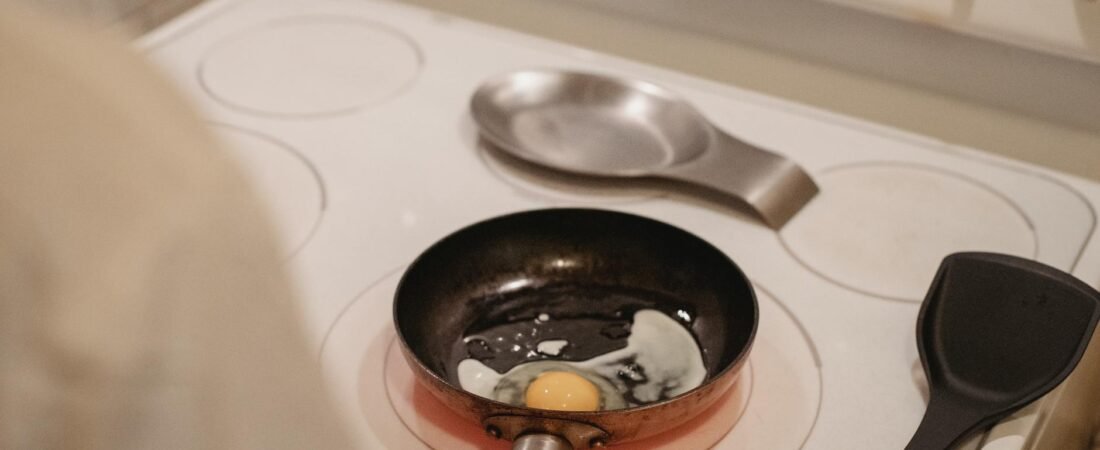
If your eggs have started welding themselves to a pan that still says nonstick, the problem usually is not that you bought a bad pan. More often, the pan is being used like a high-heat skillet or is carrying a film of burned spray oil. Across major care guides, the advice is fairly consistent: use low to medium heat, do not overheat an empty pan, and avoid aerosol cooking sprays because they can reduce food release over time. (all-clad.com)
That matters for your wallet because nonstick is a specialized tool, not a forever pan. Consumer Reports notes that nonstick skillets are best for delicate foods like eggs, pancakes, and fish, but they cannot handle the same high heat as stainless steel or cast iron and do not last as long. If you keep using a nonstick pan for the wrong jobs, you can end up paying replacement-pan prices for what is really a technique problem. (consumerreports.org)
The real mistake: treating nonstick like maintenance-free cookware
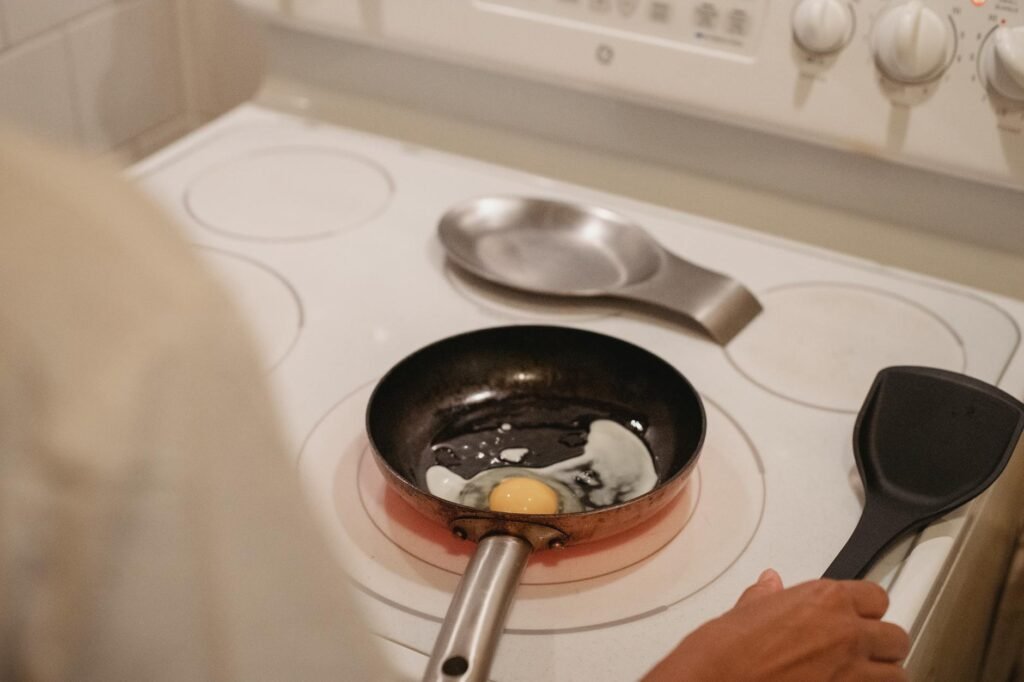
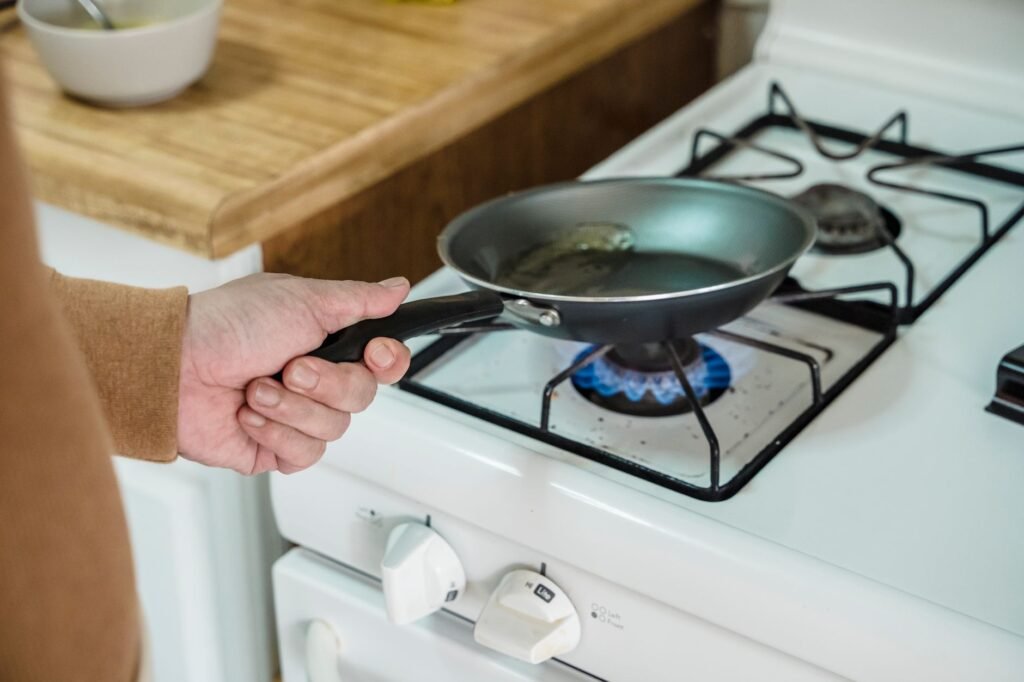
The expensive mistake is assuming the label “nonstick” means “use it however you want.” On PTFE and ceramic lines alike, manufacturers warn against high heat and empty preheating. All-Clad says to cook nonstick over low to medium heat, warns that smoking fat means the pan is too hot, and notes that high heat can damage ceramic nonstick. Circulon likewise says continuous high heat can damage nonstick and increase sticking. (all-clad.com)
The second half of the problem is the “just spray more oil” reflex. That shortcut often makes things worse. All-Clad, Scanpan, GreenPan, and Consumer Reports all warn that aerosol sprays can leave residue or carbonization that reduces the pan’s release performance instead of improving it. When that film builds up, food sticks, cleanup gets harder, and the pan can look worn out before it really is. (all-clad.com)
Run the SLICK Audit before you replace anything
Here is a simple triage tool for sticky nonstick pans: the SLICK Audit. It is meant to separate three different problems that can look identical at the stove: residue, overheating, and true surface damage.
- S – Surface film: After washing, does the pan still feel tacky or look amber, blotchy, or patchy?
- L – Low-heat test: Does food release on medium-low heat, but stick when you crank the burner?
- I – Interior damage: Do you see scratches, chips, pitting, flaking, or rough spots?
- C – Cooking-spray history: Have you been relying on aerosol spray because the pan “needs help”?
- K – Kitchen mismatch: Are you asking this pan to sear steak, go under a broiler, take metal utensils, or live in a stack of bare pans?
Warning: Score 0 to 1: clean and retest. Score 2 to 3: change habits and reserve the pan for low-heat jobs. Score 4 or more: the pan is being used for the wrong work. Any visible chips, scratches, or pitting override the score; Consumer Reports says scratched or chipped nonstick cookware should be replaced. (consumerreports.org)
A small habit can turn into a replacement cycle
Consider an illustrative household that buys a $28 nonstick skillet twice a year because eggs start sticking, and also uses six $4 cans of aerosol spray over the year. That comes to about $80 a year. Now compare that with a different setup: a $34 nonstick pan reserved for eggs and pancakes, a $40 stainless skillet for high-heat cooking, and bottled oil instead of canned spray. If the nonstick lasts three years and the stainless lasts ten, the annualized cookware cost drops to roughly $23 before you even count the value of less ruined food.
The exact numbers will vary, but the pattern is common: misuse is often more expensive than owning one extra, better-matched pan.
| What you notice | Most likely cause | Lowest-cost next move | Replace now? |
|---|---|---|---|
| Food sticks everywhere, but the pan is not scratched and you use aerosol spray often | Residue or carbonization on the surface | Deep clean using the brand-approved method and stop using aerosol spray | Usually no |
| The pan works on eggs at medium heat but sticks when you try to sear chicken or burgers on high | Heat mismatch, not a dead coating | Move high-heat jobs to stainless steel or cast iron | No |
| One spot always grabs food and the surface looks scratched or pitted | Real surface damage | Stop troubleshooting and replace or demote the pan | Yes |
| The pan feels tacky after washing and has amber or brown blotches | Burned oil film | Use a gentle residue-removal method approved by the maker | Maybe |
| The pan sticks after years of heavy use even with good habits | Normal wear | Replace if it no longer performs on low-heat foods | Probably |
A 10-minute nonstick reset
- Check your care guide first. Deep-clean methods vary by coating. For example, All-Clad suggests a 50/50 vinegar-water boil for some nonstick residue, while its ceramic guidance suggests a gentle baking soda and vinegar paste, and GreenPan suggests near-boiling water plus a melamine sponge for sticky carbonization. (all-clad.com)
- Let the pan cool completely, then wash it with warm soapy water and a soft sponge or nylon pad. Avoid steel wool, abrasive pads, oven cleaners, bleach, and cold-water shock. (all-clad.com)
- If the surface still feels sticky, use only the brand-approved deep-clean method for your coating. Do not attack it with harsh scrubbers just because it already sticks. (all-clad.com)
- Dry the pan fully. On the next cook, preheat on medium or lower for about 60 to 90 seconds, not on high, then add a small amount of butter or oil. (scanpan.com)
- Retest with an egg, pancake, or piece of fish, not a steak. Nonstick is meant for delicate, stick-prone foods. (consumerreports.org)
- If the same area still grabs food, or if you can now clearly see scratches, chips, or pitting, stop troubleshooting and replace or demote the pan. (consumerreports.org)
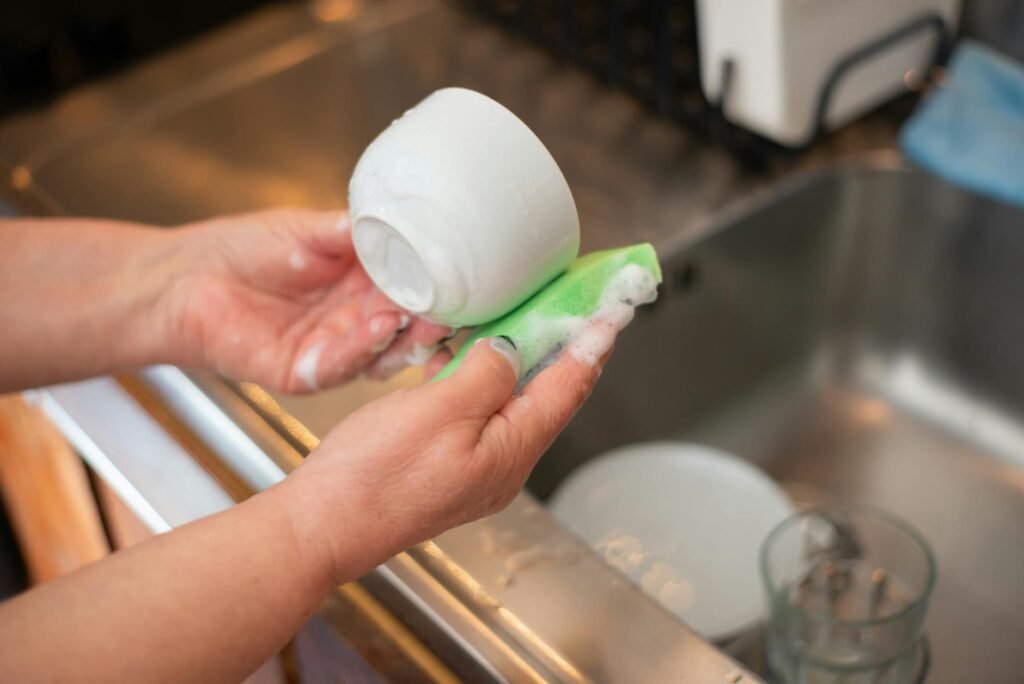
One rule is worth remembering because it is easy to spot in real time: smoke is a warning light. If the butter or oil is smoking in a nonstick pan, you are not “finally getting it hot enough.” You are usually overheating the surface and shortening its useful life. (all-clad.com)
When the cheapest fix is a second pan, not another nonstick
A better kitchen system is often one modest nonstick skillet for eggs, pancakes, grilled cheese, and fish, plus one stainless steel or cast-iron skillet for steak, burgers, blackened foods, and hard searing. That is not cookware snobbery. It is simply a matter of matching the pan to the heat level and food type. Consumer Reports describes nonstick in almost exactly that role: excellent for delicate foods, weak for high-heat browning. (consumerreports.org)
In this area, households tend to spend more money than necessary. Instead of purchasing multiple “better” nonstick skillets, it would be more beneficial to just purchase one good searing pan. If you are cooking steaks twice per week, you should use the next dollars spent on cookware in either stainless/cast iron before spending on your new nonstick skillets/utensils.
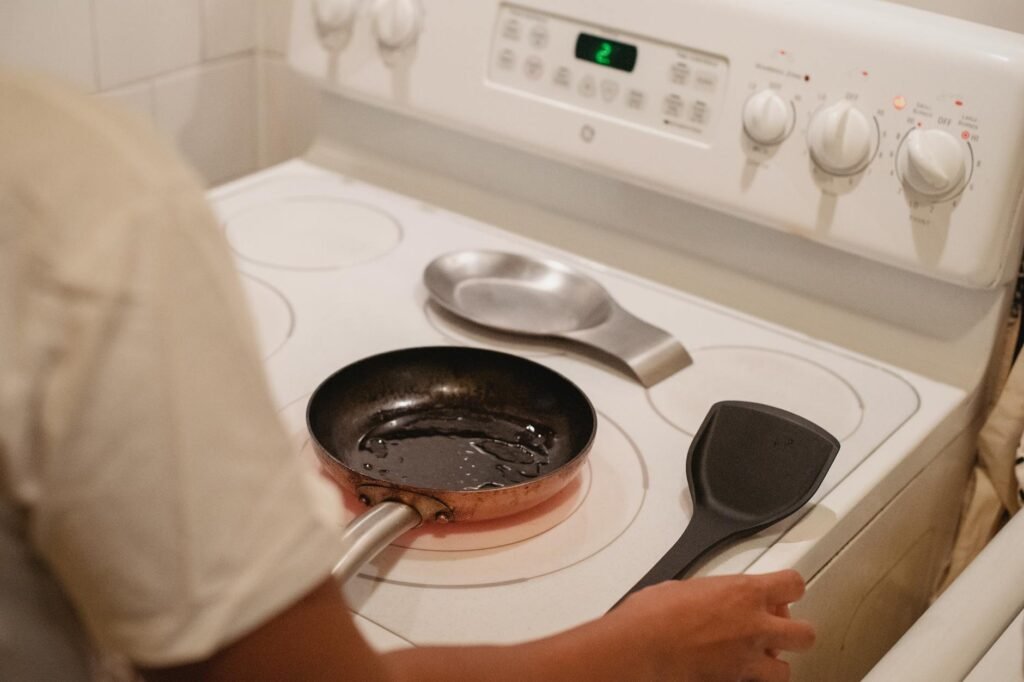
Mistakes that quietly ruin a good pan
- Preheating empty on high because you want a fast sear. That is one of the fastest ways to overheat nonstick and speed up wear. (all-clad.com)
- Using aerosol spray as insurance. The residue can make release worse, not better. (all-clad.com)
- Using metal utensils, abrasive scrubbers, or stacking pans without protection. All of those raise the chance of scratches that turn into sticking. (all-clad.com)
- Assuming “dishwasher safe” means “best cleaned in the dishwasher.” Some brands still recommend hand washing to preserve finish or coating life. (all-clad.com)
- Trying to get steakhouse browning from a nonstick pan instead of switching to stainless steel or cast iron. (consumerreports.org)
When cleaning is not enough
Sometimes the pan really is done. If you can see scratches, chips, pitting, or a dead zone that still sticks after a careful reset, replacement is the practical move. Consumer Reports says scratched or chipped nonstick should be replaced, both because performance drops and because coating can flake into food. (consumerreports.org)
One limit is worth stating clearly: performance advice and material-preference advice are not the same question. The FDA says PTFE-based nonstick coatings used on pots and pans are highly polymerized, tightly bound to the cookware, and studies show negligible amounts can migrate to food. If you still prefer to avoid PTFE-type coatings altogether, that is a reasonable preference choice, and ceramic-coated or uncoated pans may fit you better. (fda.gov)
Note: This article is informational, not a product-safety clearance. Always follow the specific care guide for your own pan, because ceramic, PTFE, and hybrid surfaces do not all permit the same cleaning methods or heat levels. (all-clad.com)
How to pressure-test the advice in your own kitchen
- Cook one egg in the cleaned pan over medium-low heat with about 1 teaspoon of butter or oil. If the fat smokes, back the heat down. (all-clad.com)
- Wash the pan, then repeat the same test the next day. Two clean releases in a row usually mean the real issue was residue or heat management, not instant pan death.
- If sticking returns only when you turn the burner high, the diagnosis is simple: the pan is fine for low-heat jobs and wrong for searing.
- If the same scratches or the same patch keep grabbing food, you have a surface problem, not a recipe problem. (consumerreports.org)
Bottom line
The money-saving move is not chasing a miracle nonstick pan. It is using nonstick as a low-to-medium-heat specialist, skipping aerosol spray, cleaning residue before it hardens, and replacing the pan only when the surface is actually damaged. That approach matches what major care guides and product testing say, and it often costs less than buying replacement pans on repeat. (all-clad.com)
FAQ
Why does my nonstick pan work for a while and then suddenly start sticking?
Often because residue built up slowly or the pan saw repeated high heat. GreenPan specifically describes sticky spots as carbonization, and multiple manufacturers warn that high heat and aerosol sprays reduce nonstick performance over time. (greenpan.us)
Can a sticky nonstick pan be fixed?
Sometimes. If the issue is residue, a brand-approved deep clean can restore release. If the coating is scratched, chipped, or pitted, cleaning is unlikely to solve it and replacement is the better move. (all-clad.com)
Do I need oil in a nonstick pan?
Usually at least a little. All-Clad and GreenPan both recommend butter or oil for better performance, especially during preheating on ceramic lines. Nonstick reduces sticking; it does not turn every recipe into a dry-pan recipe. (all-clad.com)
Is high heat okay if the pan is oven-safe to 450°F or 500°F?
Do not assume the oven rating is a stovetop recommendation. All-Clad still says low to medium heat for its nonstick lines, and Circulon warns that continuous high heat can damage nonstick and make sticking more likely. (all-clad.com)
What is the best backup pan if I keep ruining nonstick?
For high-heat browning and searing, stainless steel or cast iron is the better partner. Consumer Reports says nonstick shines with eggs, pancakes, fish, and other delicate foods, not hard searing. (consumerreports.org)
Are refillable oil misters different from canned cooking spray?
The warnings in care guides are mainly about aerosol sprays with additives and propellants that leave residue. If you want spray-like control, Consumer Reports suggests using a refillable mister with your preferred oil instead of canned aerosol spray. (consumerreports.org)
References
- All-Clad Use and Care Guide – https://www.all-clad.com/care-use
- Circulon: Cooking with High Heat – https://support.circulon.com/support/solutions/articles/65000167012-cooking-with-high-heat
- GreenPan Care & Use – https://www.greenpan.us/pages/care-use
- Scanpan USA Use & Care – https://www.scanpan.com/use-and-care
- FDA: Authorized Uses of PFAS in Food Contact Applications – https://www.fda.gov/food/process-contaminants-food/authorized-uses-pfas-food-contact-applications
- Consumer Reports: Can You Use Cooking Spray on a Nonstick Pan? – https://www.consumerreports.org/cookware/cooking-spray-on-nonstick-pan/?msockid=3179727e0ab56e933dae641d0b5b6f35
- Consumer Reports: Best Frying Pans for the Way You Cook – https://www.consumerreports.org/home-garden/cookware/best-frying-pans-for-the-way-you-cook-a6216472507/?msockid=3447fcadd1db619831ecea1bd03060aa
- Consumer Reports: How Not to Ruin Your Nonstick Pan – https://www.consumerreports.org/frying-pans-nonstick-/make-your-nonstick-frying-pan-last/